Engaging Activities
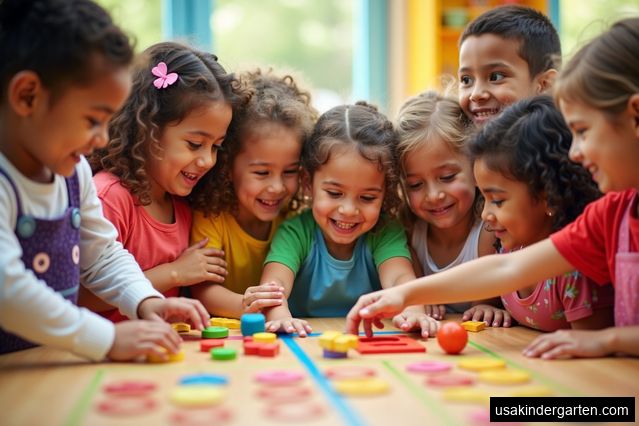
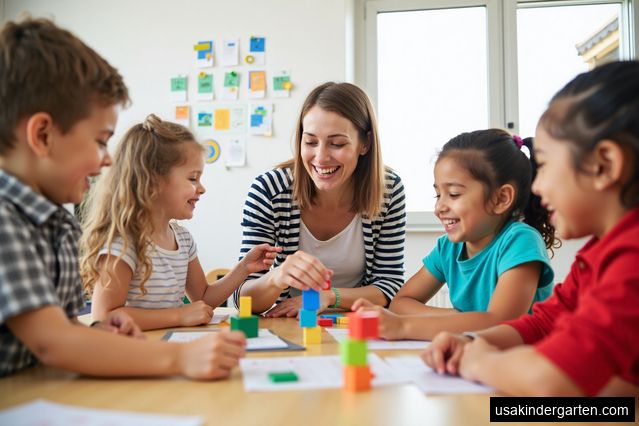
Incorporate hands-on activities and games to make math more engaging for kindergartners. Use manipulatives like blocks, counting cubes, or even snacks like pretzels or grapes to help children visualize and understand mathematical concepts. For example, you can have them count and sort objects, create patterns, or group items based on attributes like color or shape.
Math Centers
Set up math centers in your classroom where children can explore various math concepts through play. Designate areas for counting, sorting, measuring, and pattern-making. Provide hands-on materials and encourage children to work collaboratively, promoting social interaction and problem-solving skills.
Integrate Math into Everyday Activities
Make math a part of students' daily routines by integrating it into everyday activities. Incorporate counting and number recognition while lining up, distributing supplies, or during snack time. Encourage children to estimate quantities and compare sizes when sharing materials or objects. This not only reinforces math skills but also helps children understand the practical relevance of mathematics in their lives.
Math in Literature
Use children's literature to introduce and reinforce math concepts. Choose books that incorporate counting, shapes, patterns, or measurement. After reading a story, engage students in discussions or activities related to the mathematical elements present in the book. This approach combines literacy and math, making learning more enjoyable and meaningful.
Gamify Math Lessons
Turn math lessons into games to capture children's attention and make learning fun. Use interactive online platforms, apps, or educational games specifically designed for kindergarten math. Incorporate friendly competitions, rewards, or challenges to motivate students and keep them engaged. By gamifying math lessons, you can create a positive and exciting learning environment.
Math-related Art Activities
Fuse math with creativity by incorporating art activities. Have children create their own number lines or geometric shapes using colored paper or craft materials. Explore symmetry by making symmetrical art pieces or using mirrors. This approach allows students to express their creativity while reinforcing mathematical concepts in a visually appealing way.